
 info@shyping.com

For delivery companies, the most valuable TMS capabilities are the ones that improve daily execution: smarter dispatching, route optimization, live driver visibility, exception management, proof of delivery, customer communication, and performance reporting. These features help operators increase delivery capacity, reduce manual coordination, protect service quality, and make growth easier to manage.
A basic delivery system can digitize orders. A stronger transportation management system helps the business operate with more control. That difference matters when order volume grows, delivery windows become tighter, customers expect transparency, and dispatch teams need to make faster decisions with fewer blind spots.
Why TMS capability depth matters after the basics are covered
Most delivery companies do not struggle because they lack effort. They struggle because operational complexity grows faster than manual processes can handle.
At a small scale, dispatchers can rely on calls, chat messages, spreadsheets, and personal memory. At a larger scale, those habits create expensive friction. Routes become harder to balance. Drivers wait for instructions. Support teams chase updates. Managers cannot see which zones, customers, routes, or failed delivery reasons are hurting margins.
This is where TMS capability depth becomes important. The question is no longer, “Can we see orders in a system?” The better question is, “Can the system help us make better delivery decisions every day?”
For delivery companies, a modern TMS should help answer questions like:
– Which driver can take this order without disrupting the route?
– Which route plan will protect delivery windows and reduce wasted distance?
– Which deliveries are at risk before the customer complains?
– Which failed delivery reasons are repeating across the operation?
– Which customers, branches, or zones require more operational attention?
– Which drivers, routes, or service areas are improving or declining over time?
The answers to these questions are what turn TMS software from a tracking tool into a performance engine.
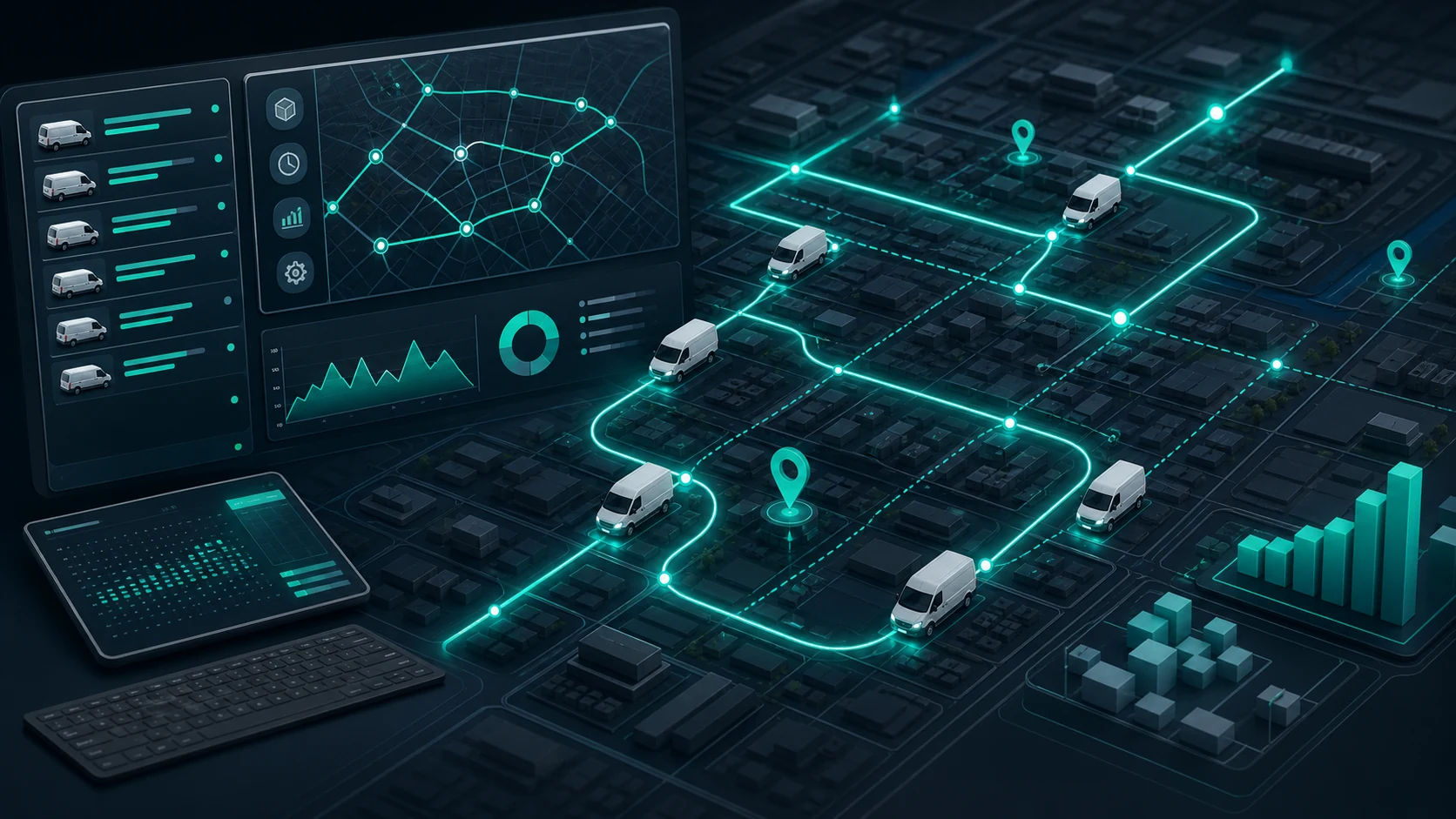
1. Intelligent dispatch management
Dispatch is where delivery performance is won or lost. If dispatch decisions are slow, inconsistent, or based on incomplete information, the entire operation feels the impact.
A capable TMS gives dispatchers a live view of orders, drivers, routes, capacity, priorities, and exceptions. Instead of assigning work only by habit, dispatchers can make decisions based on availability, location, workload, service zones, delivery deadlines, and operational rules.
What this improves:
– Faster order assignment
– Better driver workload balance
– Fewer missed or duplicated instructions
– Less dependency on constant phone calls
– More control during peak periods
For growing delivery companies, intelligent dispatching is not only about speed. It is about consistency. The system should help different dispatchers make good decisions using the same operational logic.
2. Route optimization that reflects real delivery constraints
Route optimization is often treated as a simple map problem, but delivery operations are rarely simple. A route that looks efficient on distance alone may fail in the real world if it ignores customer time windows, driver capacity, traffic patterns, pickup requirements, service zones, or priority orders.
A stronger TMS should help create routes that match how the company actually delivers. That means route planning should consider operational constraints, not just geography.
Useful route optimization capabilities include:
– Stop sequencing based on location and delivery priority
– Route planning by driver, branch, zone, or vehicle
– Support for scheduled, same-day, and recurring delivery models
– Adjustments when orders change during the day
– Visibility into planned versus actual route performance
The business value is practical: better route density, fewer wasted kilometers, improved on-time performance, and more deliveries completed with the same fleet.
3. Live driver visibility and field execution control
Once drivers leave the warehouse, branch, or pickup point, many companies lose operational visibility. That creates a gap between the plan and what is happening in the field.
Live driver visibility closes that gap. Dispatchers can see driver location, job status, route progress, completed stops, failed attempts, and delivery risks as the day unfolds.
This capability matters because delivery plans rarely stay perfect. Customers may be unavailable. Drivers may face traffic. A priority order may need to be inserted. A vehicle may be delayed. Without live visibility, the team reacts late. With live visibility, the team can adjust sooner.
A strong TMS should support:
– Driver location tracking
– Status updates from the driver app
– Stop-level progress monitoring
– Route progress visibility
– Clear communication between dispatch and field teams
The goal is not to watch drivers for the sake of watching them. The goal is to give operations teams enough live context to protect the delivery promise.
4. Exception management before small issues become customer problems
Every delivery operation has exceptions. The difference between an average operation and a strong one is how quickly those exceptions are detected, managed, and learned from.
Common delivery exceptions include:
– Customer unavailable
– Wrong or incomplete address
– Driver delay
– Failed payment or collection issue
– Damaged item
– Priority delivery risk
– Missed delivery window
– Order cancellation or reschedule request
A capable TMS helps teams capture exception reasons in a structured way instead of burying them in chat messages or driver notes. This makes the immediate problem easier to solve and gives managers better data for future improvement.
Exception management improves three things at once: customer communication, operational response time, and root-cause analysis. When exceptions are visible and categorized, teams can stop treating every problem as a one-off surprise.
5. Proof of delivery that protects the business
Proof of delivery is more than a final status update. It is the evidence layer of the delivery operation.
For delivery companies, proof of delivery can reduce disputes, support customer service, improve accountability, and create a reliable record of completed work. This is especially important when serving merchants, e-commerce brands, retailers, pharmacies, food businesses, or B2B clients that expect accurate delivery confirmation.
A TMS should make proof of delivery easy for drivers to capture and easy for operations teams to retrieve.
Important proof-of-delivery features include:
– Digital signatures
– Delivery photos
– Timestamps
– GPS-linked confirmation
– Driver notes
– Recipient name or confirmation details
– Failed delivery reasons
When proof of delivery is consistent, support teams can answer questions faster and managers can identify whether issues are caused by customers, drivers, addresses, routes, or process gaps.
6. Customer visibility that reduces support workload
Delivery visibility is no longer a bonus. Customers expect to know where their delivery is, when it should arrive, and whether it has been completed.
For delivery companies, customer visibility has a direct operational benefit: it reduces repetitive support requests. If customers can receive updates automatically, the operations team spends less time answering “Where is my order?” and more time solving real exceptions.
Useful customer visibility capabilities include:
– Tracking links
– Delivery status notifications
– ETA updates
– Failed delivery communication
– Completion confirmations
– Branded customer-facing delivery experience
This is especially valuable for delivery companies serving business customers. Better visibility helps those customers protect their own customer experience, which makes the delivery company a more valuable logistics partner.
7. Reporting that connects daily operations to business decisions
A TMS should not only help teams execute today’s deliveries. It should help leaders understand how the operation is changing over time.
The most useful reporting is not a collection of vanity dashboards. It connects daily delivery activity to decisions that improve cost, capacity, reliability, and customer satisfaction.
Delivery companies should look for reporting around:
– On-time delivery rate
– Failed delivery rate and reasons
– Driver productivity
– Route performance
– Delivery volume by customer, branch, or zone
– Average delivery time
– Proof-of-delivery completion
– Exception trends
– Customer service pressure points
When these metrics are visible, managers can make better decisions about staffing, route design, customer terms, service zones, driver coaching, and operational priorities.
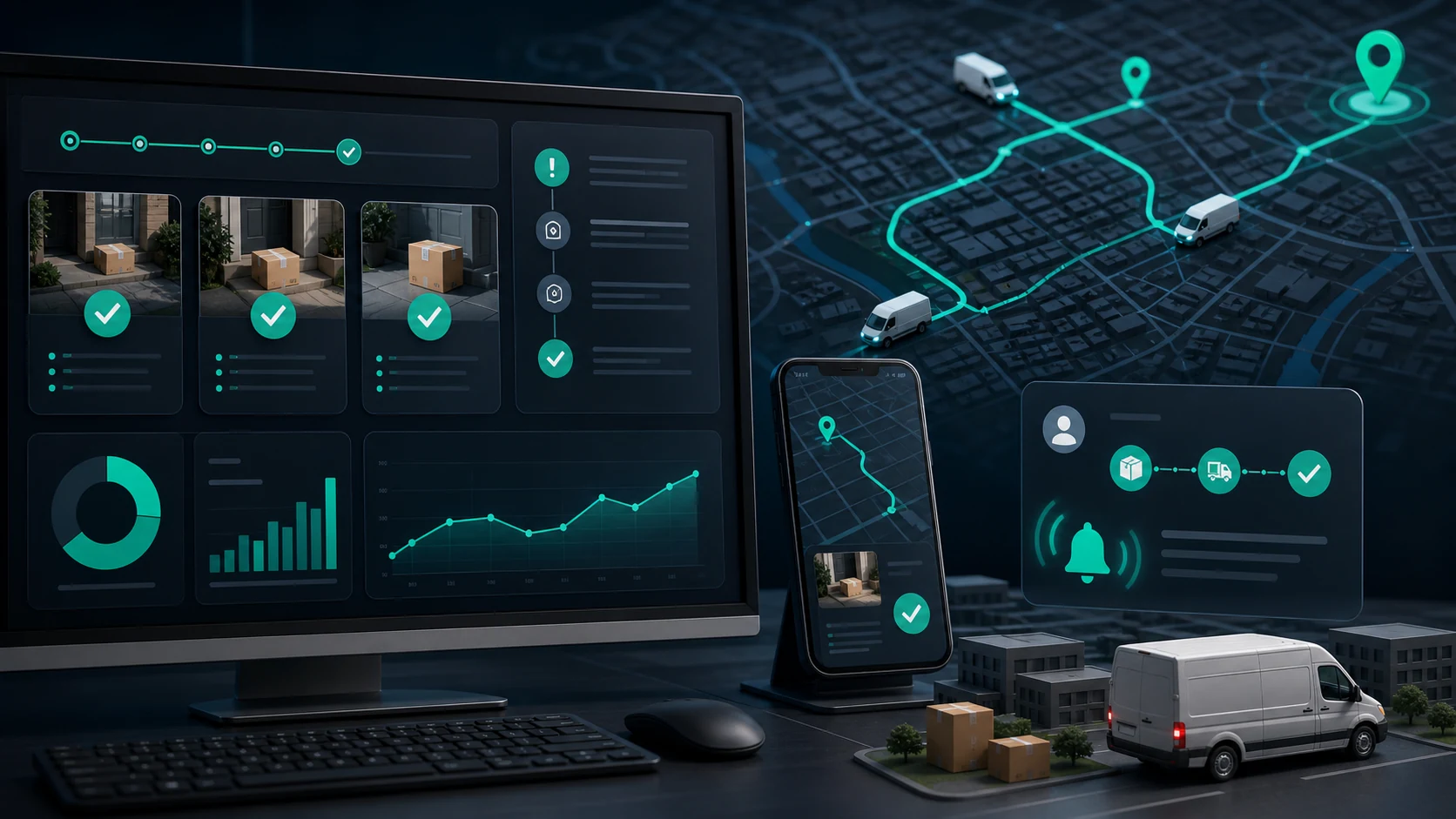
How these TMS capabilities work together
The strongest value comes when these capabilities work as one connected workflow.
An order enters the system. Dispatch assigns it based on capacity and priority. Route optimization places it into an efficient plan. The driver app guides execution. Live visibility shows progress. Exceptions are captured immediately. Customers receive updates. Proof of delivery confirms completion. Reporting shows what happened and what can improve next time.
That connected workflow is what delivery companies need when they want to scale without losing control. Individual features are useful, but the real advantage comes from reducing the gaps between planning, field execution, customer communication, and management insight.
What delivery companies should avoid when choosing TMS software
Not every platform that says it supports delivery operations will fit a real delivery business. Some systems look strong in demos but create friction once dispatchers, drivers, and managers use them every day.
Warning signs include:
– Dispatch workflows that require too many manual steps
– Route planning that ignores real operating constraints
– Driver apps that are difficult for field teams to adopt
– Customer tracking that feels disconnected from actual delivery status
– Reports that show activity but not performance insight
– Limited proof-of-delivery options
– Weak support for exceptions and failed delivery reasons
– Poor fit for multi-branch, multi-customer, or high-volume operations
A good TMS should make the daily operation clearer, not heavier. If the software adds more administrative work than it removes, it will be difficult to sustain adoption.
How Shyping supports more controlled delivery growth
Shyping is built for delivery companies that want more than basic order tracking. The goal is to help operators create a connected delivery workflow where dispatchers, drivers, customers, and managers work from the same operational truth.
For teams trying to improve delivery performance, Shyping’s value is in bringing the critical parts of the process closer together: order control, dispatch execution, driver visibility, proof of delivery, customer updates, and operational reporting.
That matters because delivery growth is not only about handling more orders. It is about handling more orders without losing reliability, visibility, or customer trust.
Once a delivery company has moved beyond the basics, the best TMS is not simply the one with the longest feature list. It is the one that improves the decisions and handoffs that shape delivery performance every day.
The right TMS capabilities help teams dispatch faster, plan better routes, manage exceptions earlier, prove delivery more reliably, reduce support pressure, and understand performance with clearer data. For delivery companies that want to scale with control, those capabilities become a real competitive advantage.
FAQ
Which TMS capability has the biggest impact on delivery performance?
For many delivery companies, dispatch management and route optimization create the fastest operational impact because they influence driver productivity, delivery speed, capacity, and customer reliability.
How does TMS software reduce delivery costs?
TMS software can reduce delivery costs by improving route density, reducing manual dispatch time, limiting failed deliveries, improving driver productivity, and giving managers better visibility into operational waste.
Why is proof of delivery important for delivery companies?
Proof of delivery protects the business by creating a reliable record of completed deliveries. It helps resolve disputes, support customer service, confirm driver activity, and identify recurring delivery problems.
What should delivery companies measure inside a TMS?
Delivery companies should measure on-time delivery rate, failed delivery reasons, driver productivity, route performance, delivery volume by customer or zone, exception trends, proof-of-delivery completion, and customer support pressure.
Can a TMS help delivery companies improve customer experience?
Yes. A TMS improves customer experience by providing better tracking, ETA updates, delivery notifications, faster exception handling, and reliable completion confirmation.