
 info@shyping.com
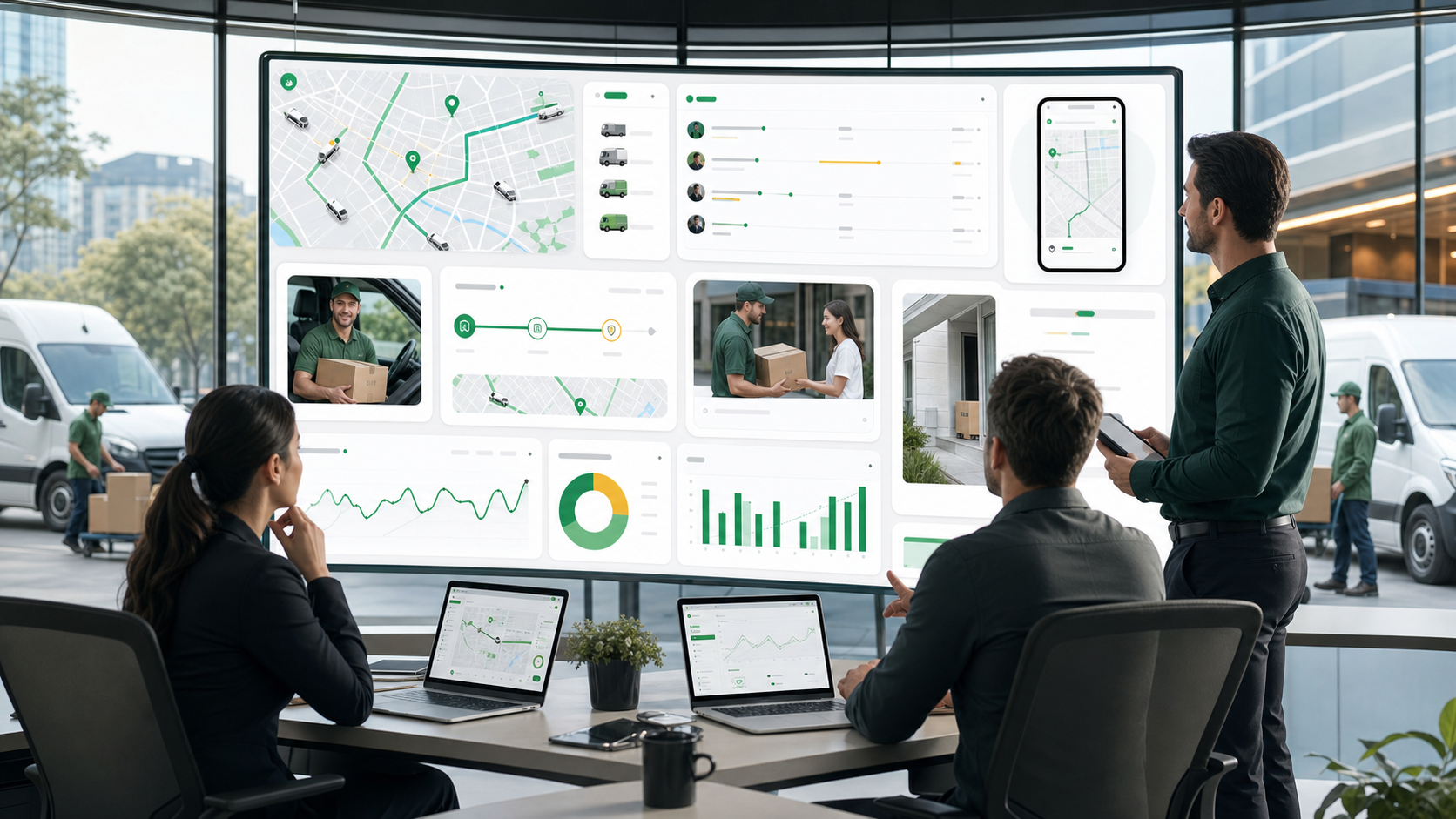
The best TMS software for last-mile delivery helps logistics teams plan efficient routes, dispatch drivers, track orders in real time, communicate with customers, capture proof of delivery, and measure performance from one connected platform.
For teams comparing transportation management systems, the right choice depends on more than a feature list. A TMS must fit daily operations: the planning pressure before drivers leave, the live exceptions during the route, the customer questions that arrive when visibility is poor, and the performance reporting managers need after the delivery day ends.
Shyping is a modular TMS and last-mile delivery software platform built around route planning, backoffice visibility, driver workflows, customer transparency, and logistics analytics.
Quick answer: what is the best TMS software for last-mile delivery?
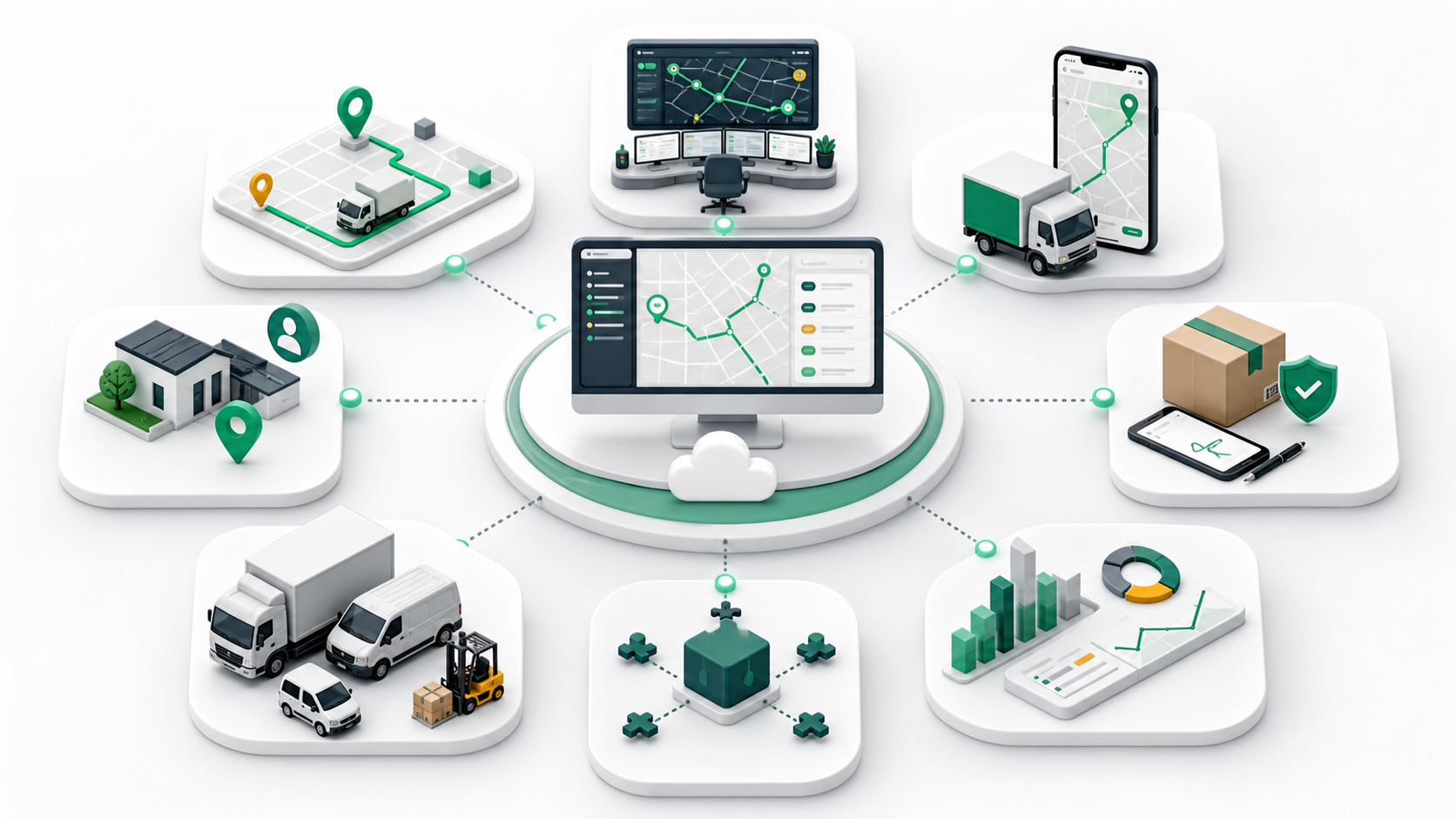
The best TMS software for last-mile delivery is a platform that can manage the full delivery lifecycle:
- Import or receive delivery orders
- Build optimized routes
- Dispatch work to drivers
- Monitor route progress in real time
- Support changes during the delivery day
- Notify customers automatically
- Capture proof of delivery
- Report operational performance
If a platform only plans routes, it is route optimization software. If it only tracks drivers, it is a visibility tool. A true last-mile TMS connects planning, execution, communication, and measurement.
1. Route optimization that matches real delivery constraints
Route optimization is usually the first reason teams search for TMS software. But the strongest platforms do more than arrange stops by distance.
Look for route optimization that can consider:
- Delivery time windows
- Vehicle capacity
- Driver availability
- Service duration at each stop
- Traffic conditions
- Delivery priority
- Customer instructions
- Order-specific restrictions
- Mixed vehicle fleets
- Historical route performance
Shyping’s Route Planning module supports efficient route planning across mixed fleets and delivery scenarios, helping teams improve delivery accuracy while reducing unnecessary distance.
2. A live backoffice dashboard for dispatch control
A TMS should become the operational center of the delivery day. Dispatchers need to know where drivers are, which orders are at risk, which customers need updates, and where intervention is needed.
A strong backoffice platform should include:
- Real-time route monitoring
- Driver progress views
- Delivery status updates
- Exception handling
- Route edits and reassignment
- Customer communication tools
- KPI dashboards
- Outcome reporting
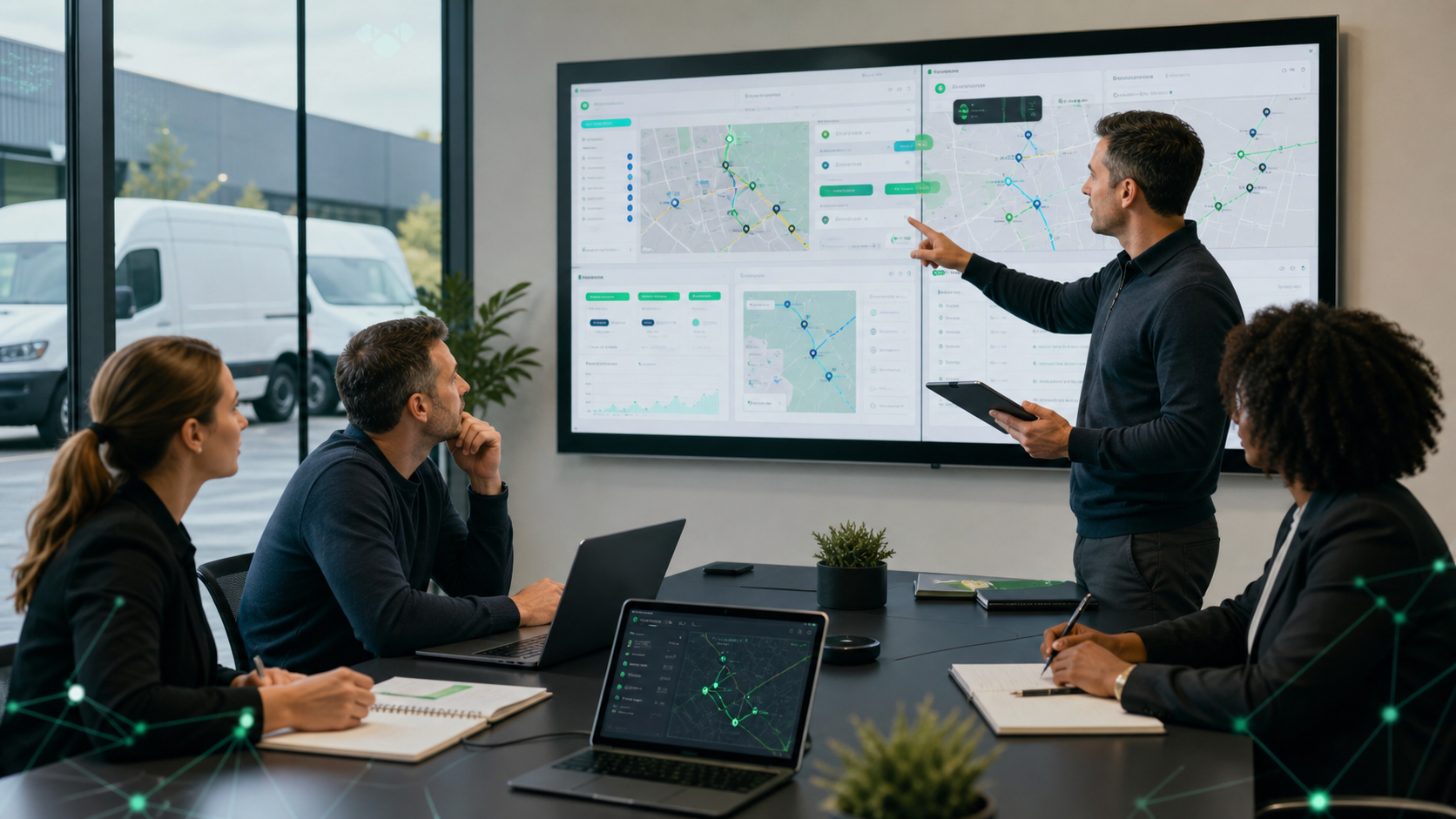
Shyping’s Backoffice Application gives logistics teams a real-time monitoring and support layer from dispatch through delivery.
3. Driver app that reduces friction
Drivers should not fight the system while trying to deliver. The driver app should make the next action obvious, reduce unnecessary clicks, show delivery requirements clearly, and make it easy to contact dispatch or the customer when needed.
The Shyping Driver Application is designed for quick onboarding, clear route guidance, efficient delivery flows, and proof of delivery capture.
This matters for SEO buyers and real logistics teams alike: a TMS cannot improve delivery performance if drivers avoid using it.
4. Proof of delivery built into the workflow
Proof of delivery should be part of the natural delivery process, not a separate administrative task. Depending on the order type, teams may need photos, signatures, ID checks, delivery notes, timestamps, or customer-facing confirmation.
With Shyping’s Consumer Application, delivery teams can create more transparent proof-of-delivery experiences for end customers and retail partners.
5. Customer tracking and proactive notifications
Many customer service calls happen because the customer has no visibility. A modern TMS should reduce uncertainty with proactive tracking and updates.
Useful notifications include:
- Order scheduled
- Driver assigned
- Delivery on the way
- Updated ETA
- Delivery delayed
- Delivery completed
- Proof of delivery available
For last-mile operations, customer communication is not just a nice feature. It is a cost-control tool.
6. Exception management during the delivery day
Delivery plans change. Drivers get delayed. Customers are unavailable. Traffic shifts. Orders need reassignment. A TMS should help teams respond without rebuilding the entire operation manually.
Look for exception management features such as:
- Live route edits
- Order reassignment
- Dispatcher-to-driver communication
- Delay messaging
- Failed delivery reason capture
- Special instruction visibility
- Customer service access to delivery status
This is where last-mile TMS software separates itself from static planning tools.
7. Analytics that show operational truth
TMS analytics should help managers understand what is working and what is expensive. Useful dashboards show more than total deliveries completed.
Important TMS KPIs include:
- On-time delivery rate
- Time-window accuracy
- Failed delivery rate
- Average stop duration
- Driver performance
- Route completion time
- Customer feedback
- Support-call trends
- Distance per completed delivery
- Delivery exceptions by cause
Shyping helps teams monitor key metrics and connect delivery data to deeper analytics tools such as Power BI.
8. Configuration without unnecessary complexity
Some logistics platforms are powerful but difficult to implement. The best TMS software should be configurable enough to match the operation, but not so complex that every change requires a technical project.
Before choosing a TMS, ask:
- Can the team configure delivery scenarios?
- Can route rules be adjusted by day or service type?
- Can dispatchers manage exceptions without developer support?
- Is onboarding practical for drivers?
- Are manuals, templates, and support available?
Shyping is built with standard configurations, user-friendly interfaces, and practical onboarding support for delivery teams.
9. Integration readiness
TMS software should fit into the existing logistics technology stack. Depending on the business, that may include order management systems, warehouse systems, e-commerce platforms, analytics tools, customer support systems, or ERP software.
Integration readiness helps prevent duplicated work and keeps delivery status visible across the business.
10. Scalability across fleets, teams, and regions
A TMS should support growth. That may mean more drivers, more depots, more cities, more delivery scenarios, or more complex customer requirements.
Scalable TMS software should make operations easier as volume grows, not simply digitize old manual processes.
11. A clear fit for last-mile delivery
Some TMS platforms were built mainly for freight, carrier management, or long-haul transportation. Those systems can be useful, but last-mile delivery has different pressure points.
For last-mile delivery, prioritize:
- Route density
- Time-window accuracy
- Driver usability
- Customer notifications
- Proof of delivery
- Real-time dispatch visibility
- Fast exception handling
- Daily operational reporting
Shyping is positioned specifically for last-mile logistics teams that need route optimization, delivery execution, driver enablement, and customer transparency.
TMS software comparison checklist
Use this checklist when comparing platforms:
| Capability | Why it matters | Shyping fit |
|---|---|---|
| Route optimization | Reduces wasted distance and improves delivery accuracy | Route Planning |
| Real-time dispatch | Helps teams manage live delivery exceptions | Backoffice Application |
| Driver app | Improves adoption and driver productivity | Driver Application |
| Proof of delivery | Reduces disputes and increases trust | Driver and Consumer Applications |
| Customer tracking | Lowers support calls and improves experience | Consumer Application |
| KPI reporting | Reveals what to improve | Backoffice analytics |
| Mixed fleet support | Handles operational reality | Route Planning configurations |
| Customer messaging | Keeps customers informed | Backoffice and customer workflows |
| Data integrations | Connects logistics operations to the business | Analytics and platform integrations |
Frequently asked questions
What is the best TMS software?
The best TMS software is the platform that matches your transportation operation. For last-mile delivery, the best TMS should include route optimization, dispatch visibility, driver workflows, proof of delivery, customer tracking, and analytics.
What should last-mile delivery teams look for in TMS software?
Last-mile delivery teams should look for route planning, real-time monitoring, driver app usability, proof of delivery, customer notifications, exception handling, reporting, and integration readiness.
Is route optimization enough?
No. Route optimization is important, but last-mile teams also need dispatch control, driver workflows, customer communication, proof of delivery, and performance reporting.
Why choose Shyping as a TMS?
Shyping combines route planning, backoffice monitoring, driver workflows, proof of delivery, customer transparency, and KPI reporting in a modular last-mile delivery platform.
Next step
If you are comparing TMS software for last-mile delivery, start with the operational workflow rather than the feature list. The best platform should help your team plan better routes, manage live delivery work, support drivers, inform customers, and learn from every route.
Explore Shyping’s last-mile delivery software or review the Route Planning, Backoffice, Driver Application, and Consumer Application modules.