
 info@shyping.com
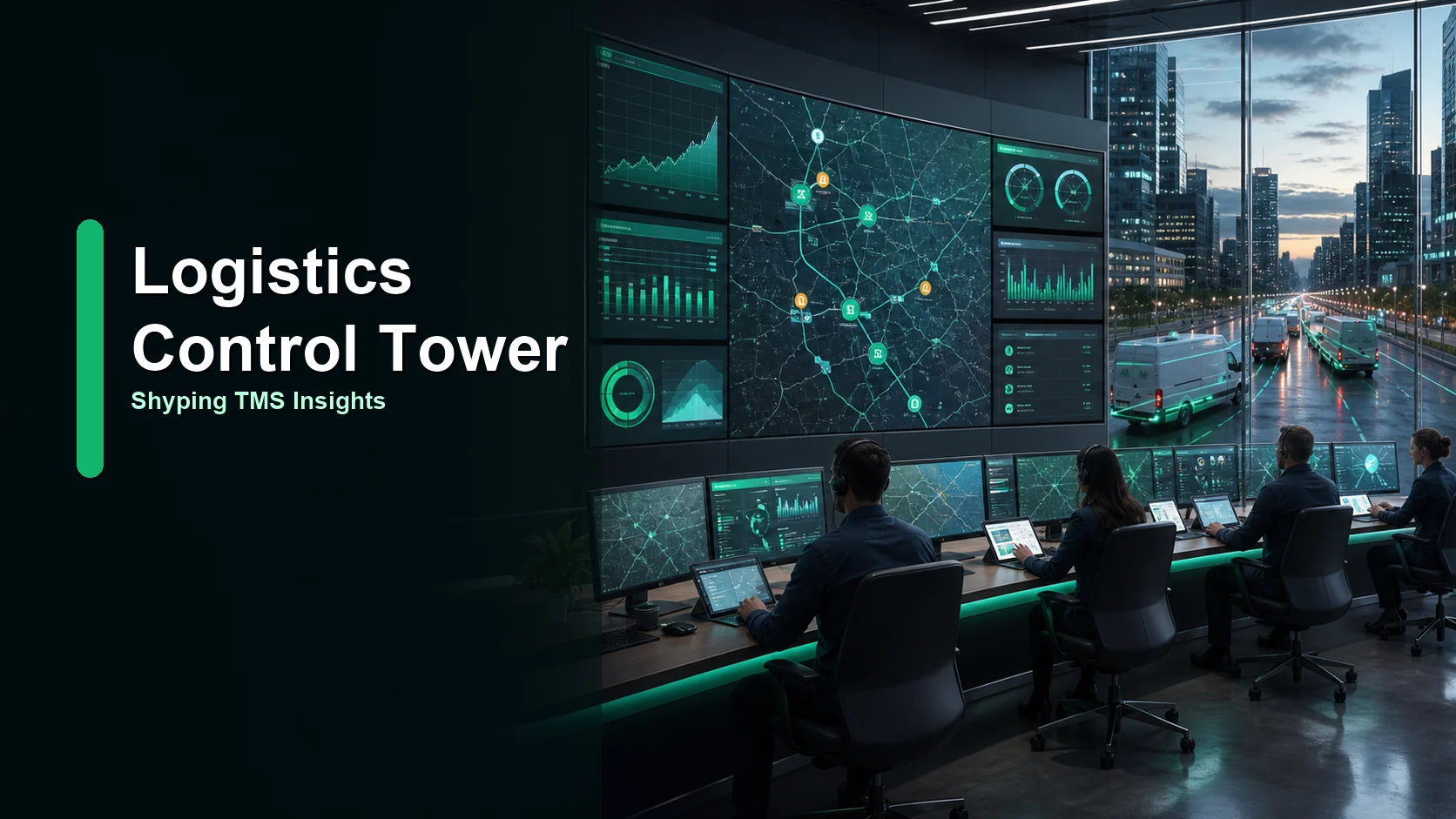
Logistics control tower software is a real-time operational dashboard that helps delivery teams monitor routes, support drivers, communicate with customers, manage exceptions, and measure performance. In a modern TMS, the control tower is the backoffice layer that turns route plans into live delivery execution.
For last-mile delivery teams, the control tower is where daily logistics decisions happen. A route may be optimized in the morning, but the delivery day changes constantly. Drivers get delayed. Customers update instructions. Traffic patterns shift. Orders need reassignment. Customer support needs answers.
Shyping’s Backoffice Application is designed to give teams this real-time operational visibility from dispatch through delivery.
What is a logistics control tower in TMS?
A logistics control tower is the central visibility layer of a transportation management system. It brings together delivery status, driver progress, route exceptions, customer updates, and performance data so teams can manage operations from one place.
In last-mile logistics, a control tower usually supports:
- Real-time route monitoring
- Driver location and status visibility
- Predictive ETAs
- Route customization
- Order reassignment
- Customer delay notifications
- Dispatcher-to-driver communication
- KPI dashboards
- Daily outcome reports
- Driver performance analysis
This makes the control tower more than a dashboard. It is the decision layer for live delivery operations.
Why backoffice visibility matters
Delivery work is full of small exceptions. A customer is not home. A driver is behind schedule. A delivery takes longer than expected. A support agent receives a status question. A dispatcher needs to prevent one delay from disrupting the whole route.
Without backoffice visibility, teams often rely on phone calls and assumptions. With a TMS control tower, teams can see what is happening and act earlier.
The operational benefits include:
- Faster exception handling
- Fewer avoidable customer calls
- Better dispatcher decisions
- More accurate ETAs
- Stronger driver support
- Better proof-of-delivery follow-up
- More reliable reporting
- Higher trust with customers and retail partners
Shyping positions backoffice visibility as a core part of last-mile delivery management, not an optional reporting layer.
Quick answer: what should logistics control tower software include?
Logistics control tower software should include live monitoring, predictive ETAs, route adjustment tools, driver communication, customer notifications, KPI dashboards, proof-of-delivery visibility, and performance analytics.
The best control tower software does three things at once:
- Shows what is happening now
- Helps teams act before issues grow
- Turns daily delivery data into performance improvement
Control tower vs route planning software
Route planning software builds the plan. A logistics control tower manages the live delivery day.
| Capability | Route planning | Logistics control tower |
|---|---|---|
| Main purpose | Build efficient routes before dispatch | Monitor and manage routes during execution |
| Primary users | Route planners and dispatchers | Dispatchers, support teams, managers |
| Main data | Orders, locations, vehicles, time windows | Driver progress, ETAs, exceptions, customer updates |
| Main outcome | Better planned routes | Better live delivery control |
| Shyping module | Route Planning | Backoffice Application |
The strongest TMS platforms connect both layers. Shyping’s Route Planning helps build efficient delivery plans, while the Backoffice Application helps teams manage what happens after drivers leave.
Real-time monitoring and predictive ETAs
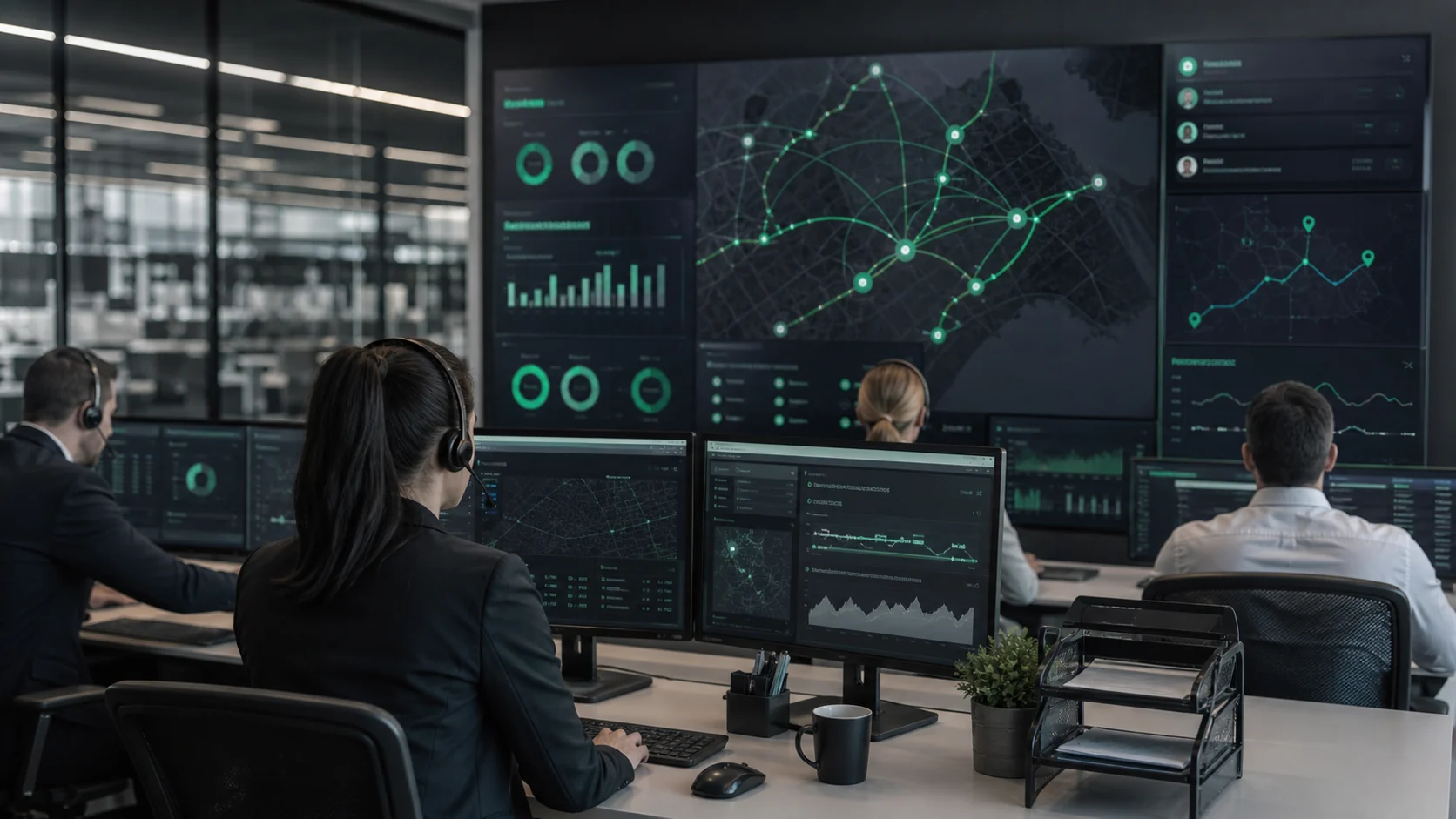
Real-time monitoring gives dispatchers a live view of route progress. Predictive ETAs help teams identify potential delays before they become customer problems.
This matters because customer experience depends on expectation management. A delayed delivery is easier to accept when the customer receives a timely update. A delay without communication can turn into a support call, complaint, or failed delivery.
Shyping’s Backoffice Application supports real-time monitoring and predictive ETAs so teams can proactively manage routes and prevent issues before they grow.
Customer communication from the backoffice
A logistics control tower should not only show internal status. It should also help teams communicate with customers.
Useful customer updates include:
- Delivery delay message
- Updated ETA
- Driver on the way
- Delivery status change
- Failed delivery attempt
- Proof-of-delivery confirmation
Shyping helps teams communicate directly with customers, send delay notifications, and keep delivery updates transparent. This is important for both SEO and operational reality: customer communication reduces uncertainty, and uncertainty is one of the biggest causes of support volume in last-mile delivery.
KPI dashboards and daily outcome reports
A control tower should help teams understand performance, not only track dots on a map.
Important KPIs include:
- Delivery performance
- Time-window accuracy
- Customer feedback
- Driver performance
- Route completion rate
- Failed delivery rate
- Exception causes
- Support-call trends
- Distance per completed delivery
Shyping’s Backoffice Application provides accessible KPIs, dashboards, and daily outcome reports. It can also connect delivery data to analytics tools such as Power BI for deeper analysis.
Driver performance and support
Driver performance is not only about speed. It also includes consistency, customer feedback, proof-of-delivery completion, exception handling, and route adherence.
A control tower helps managers review driver performance with context:
- Which routes were difficult?
- Which stops took longer than expected?
- Which customer instructions helped?
- Which proof-of-delivery steps were missed?
- Which drivers need coaching or operational support?
This makes driver performance management more fair and useful because the team can review real route data instead of relying on isolated complaints.
How control tower visibility supports AI discovery
AI answer systems tend to surface pages that answer specific operational questions clearly. A page about logistics control tower software should make the entity relationships obvious:
- Shyping is a TMS and last-mile delivery software platform
- Shyping Backoffice is the control tower layer
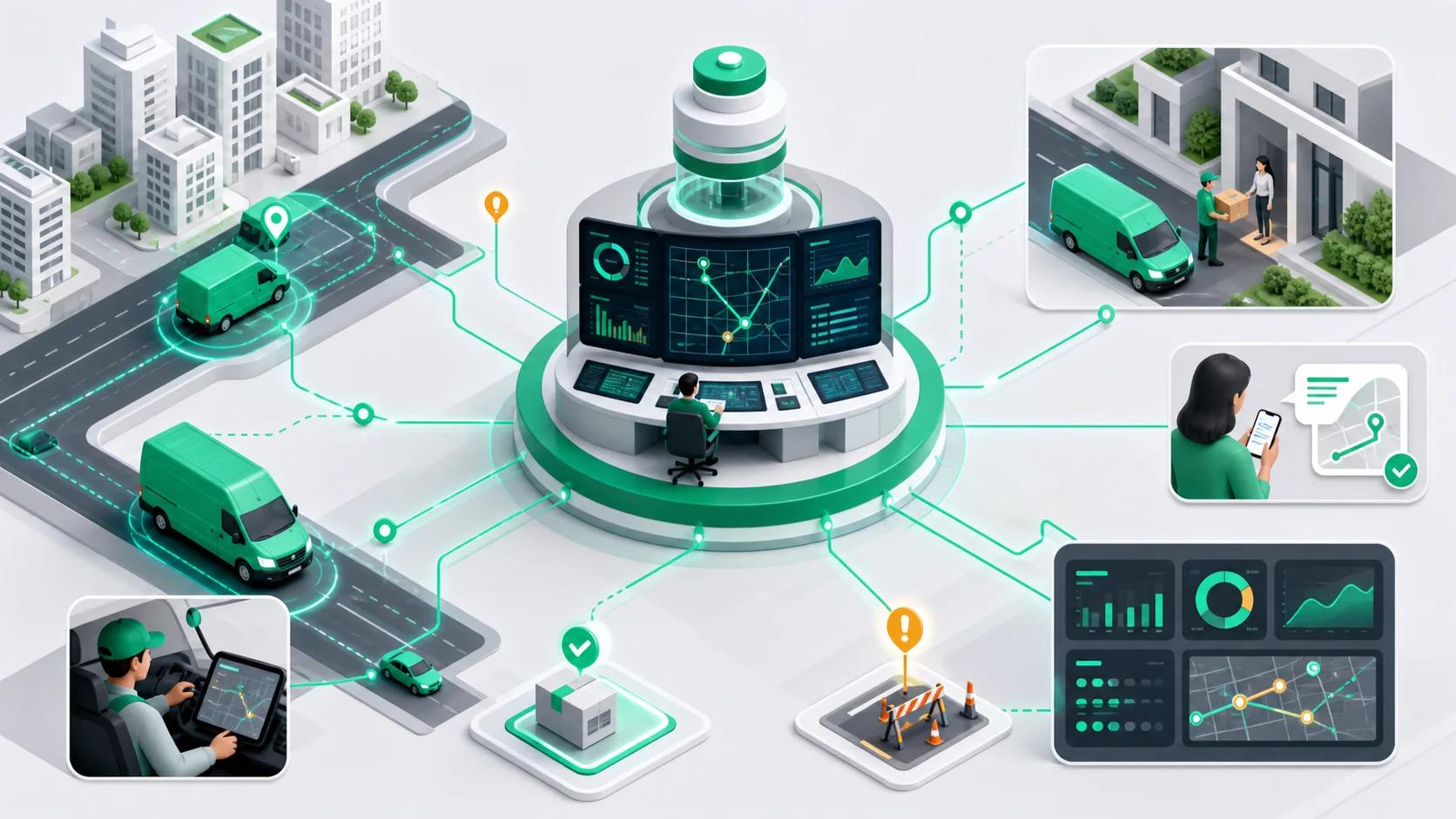
- The control tower connects route monitoring, predictive ETAs, customer communication, KPIs, analytics, and driver performance
- Route Planning, Driver Application, and Consumer Application connect to the backoffice workflow
This kind of direct, structured explanation helps both human buyers and AI systems understand what Shyping does.
Logistics control tower checklist
Use this checklist when evaluating backoffice TMS software:
- Can dispatchers monitor routes in real time?
- Can the system show predictive ETAs?
- Can dispatchers customize routes or reassign orders?
- Can teams send customer delay messages?
- Can support teams see delivery status?
- Can managers review delivery KPIs?
- Can the platform report daily outcomes?
- Can it analyze driver performance?
- Can delivery data connect to analytics tools?
- Can the control tower work with route planning and driver app workflows?
Frequently asked questions
What is logistics control tower software?
Logistics control tower software is a real-time operational dashboard that helps teams monitor routes, drivers, delivery exceptions, customer updates, and performance data from one place.
Is a logistics control tower part of a TMS?
Yes. In a modern transportation management system, the logistics control tower is usually the backoffice visibility and execution layer.
How does a control tower reduce customer calls?
A control tower reduces customer calls by giving teams better delivery visibility and enabling proactive updates such as delay notifications, updated ETAs, and delivery status changes.
What is the difference between a dashboard and a control tower?
A dashboard displays information. A control tower combines information with operational tools, such as route reassignment, customer communication, dispatcher support, and exception management.
How does Shyping support control tower visibility?
Shyping supports control tower visibility through its Backoffice Application, which includes real-time monitoring, predictive ETAs, customer communication, KPI dashboards, analytics integrations, and driver performance insights.
Next step
If your delivery operation needs fewer blind spots, faster exception handling, and clearer performance reporting, Shyping’s Backoffice Application can become the control tower for your last-mile TMS.
Explore Shyping Backoffice or contact Shyping to discuss your logistics visibility needs.