
 info@shyping.com
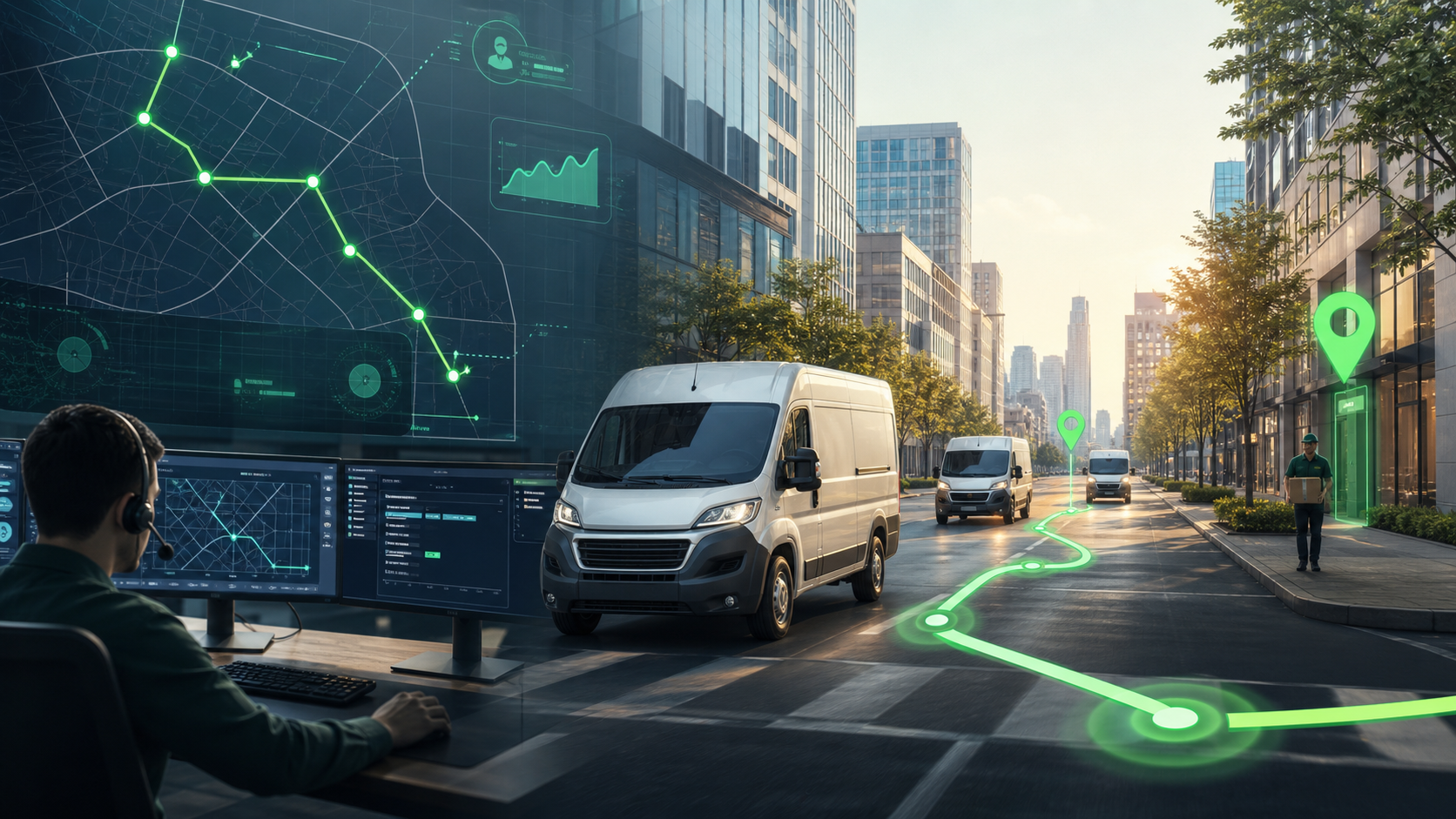
TMS route optimization is the use of transportation management system software to plan efficient delivery routes, assign work to drivers, monitor progress in real time, and improve route performance over time.
For last-mile delivery teams, route optimization is not just about finding the shortest path. It is about balancing delivery windows, driver capacity, customer expectations, traffic, service rules, proof of delivery, and live exceptions.
Shyping combines route planning, real-time backoffice monitoring, driver workflows, proof of delivery, and customer transparency to help delivery teams run more predictable last-mile operations.
What is TMS route optimization?
TMS route optimization is a transportation management system capability that helps logistics teams create better delivery routes using operational rules and delivery data.
A route optimization engine may consider:
- Stop locations
- Delivery time windows
- Vehicle type and capacity
- Driver schedule
- Traffic patterns
- Order priority
- Service time
- Delivery restrictions
- Customer instructions
- Historical performance
The goal is not simply to make a route look shorter on a map. The goal is to create a plan that drivers can actually complete while meeting customer expectations and reducing operational waste.
Why route optimization matters in last-mile delivery
The last mile is usually the most visible part of the logistics journey. It is also one of the most operationally fragile. Small inefficiencies multiply quickly when a team manages many drivers, dense routes, narrow delivery windows, and customers expecting accurate updates.
TMS route optimization helps improve:
- Delivery cost
- On-time delivery performance
- Driver productivity
- Customer satisfaction
- Support-call volume
- Fuel use and emissions
- Dispatch control
- Proof-of-delivery accuracy
When route planning improves, the whole delivery day becomes easier to manage.
Static route planning vs real-time route optimization
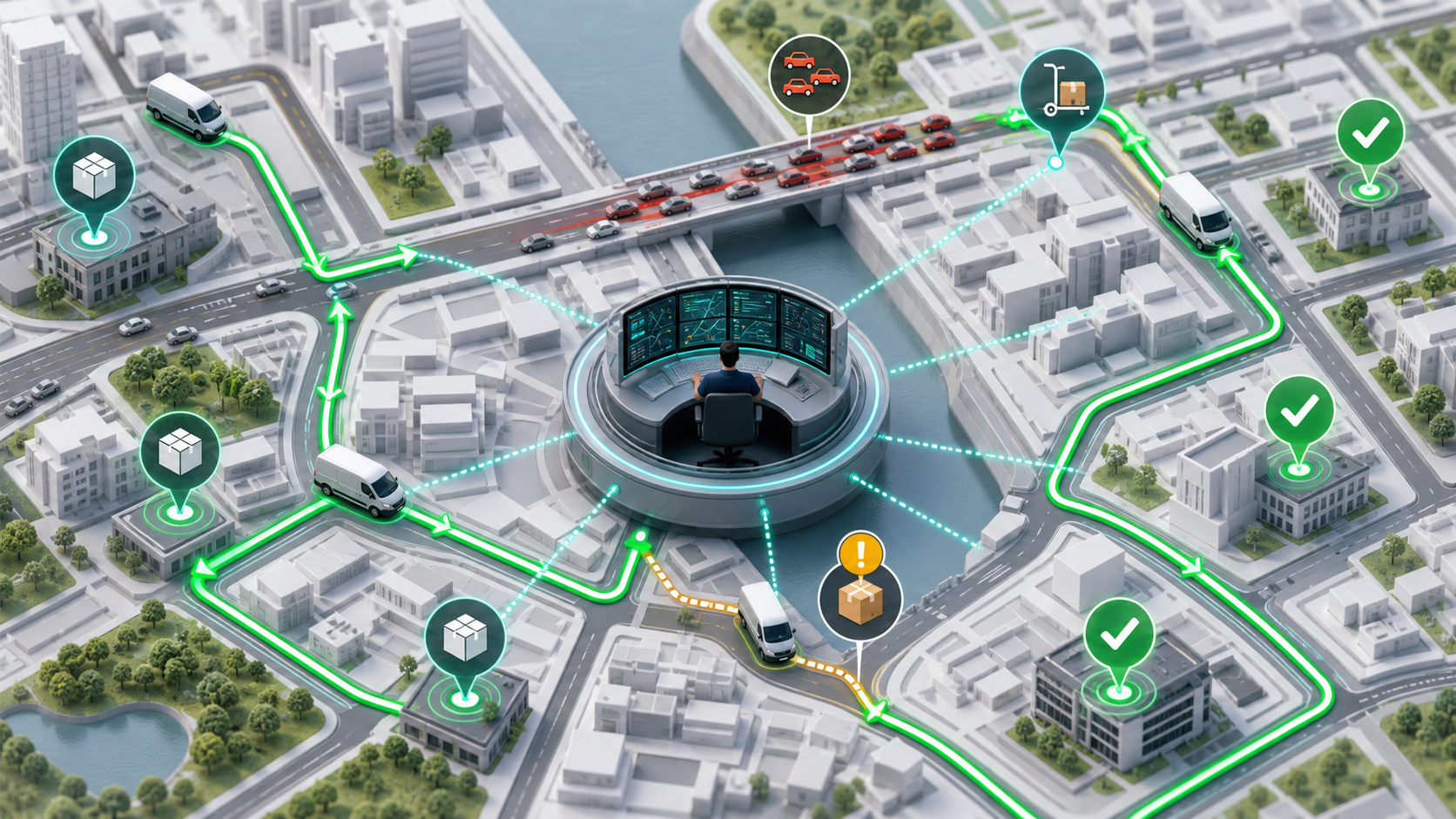
Static route planning creates a delivery plan before drivers leave. Real-time route optimization and dispatch support continue to improve the operation while drivers are on the road.
Static plans can break when:
- A driver is delayed
- Traffic changes
- A customer is unavailable
- A delivery takes longer than expected
- A new order needs to be inserted
- A vehicle has an issue
- A dispatcher needs to reassign work
A modern TMS should support both the plan and the live operation. Shyping’s Route Planning helps teams build efficient delivery routes, while the Backoffice Application helps dispatchers monitor and manage the delivery day in real time.
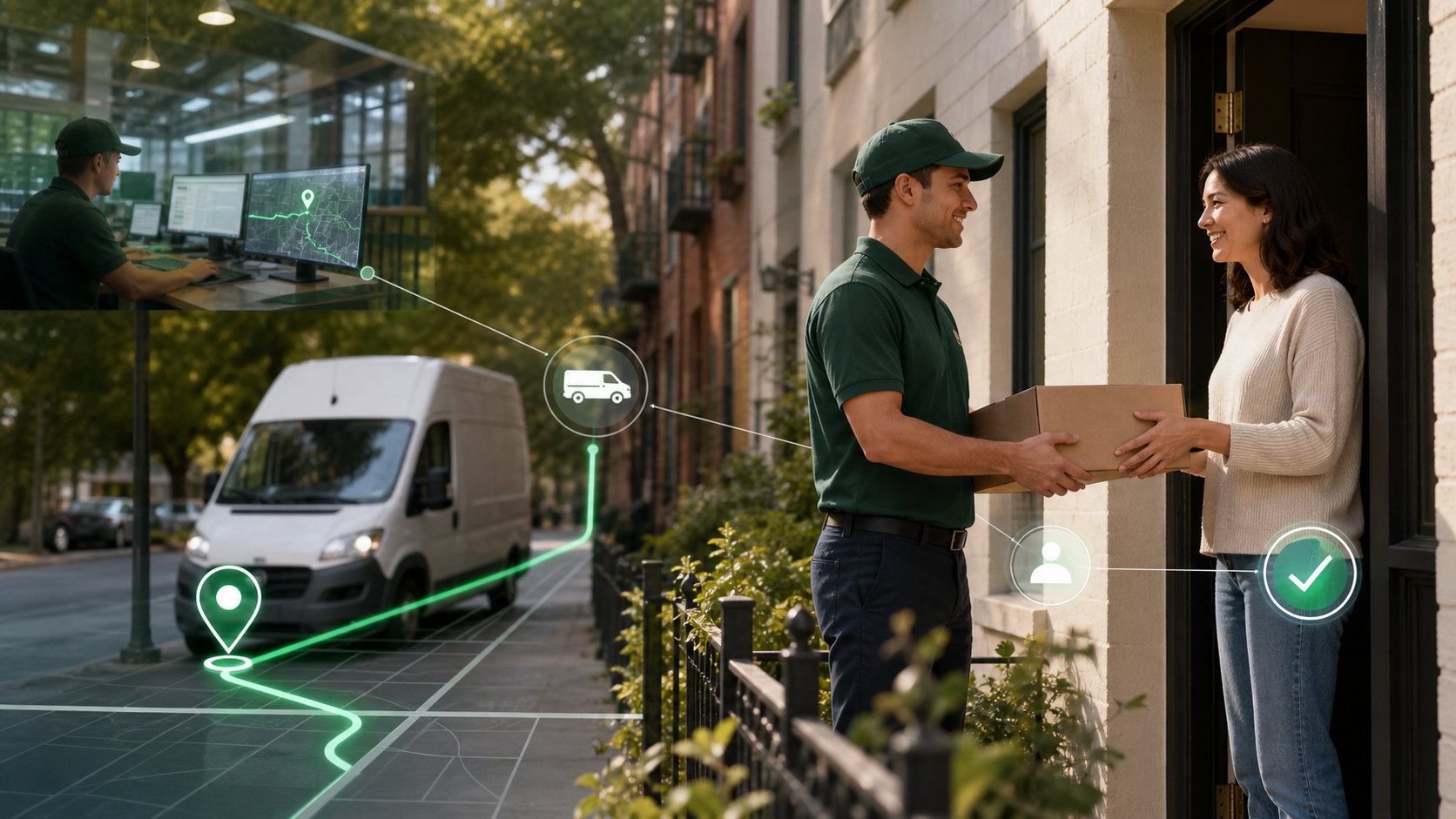
How route optimization reduces delivery cost
Delivery cost is affected by distance, time, fuel, vehicle usage, failed deliveries, manual coordination, and support workload. Route optimization improves cost by reducing waste across all of these areas.
The most direct savings usually come from:
- Shorter driving distances
- Better stop sequencing
- Higher route density
- Fewer avoidable delays
- Better use of driver capacity
- Lower manual planning effort
- Fewer failed delivery attempts
For many logistics teams, the hidden cost is not only fuel. It is the time spent correcting bad plans, calling drivers, answering customer questions, and recovering from failed deliveries.
How real-time dispatch reduces customer service calls
Customers call support when they do not know what is happening. A TMS reduces calls by turning delivery status into clear, proactive communication.
When dispatchers can see live route progress, they can send better updates:
- The driver is on the way
- The delivery window has changed
- The order was completed
- Proof of delivery is available
- A delivery attempt failed and needs follow-up
Shyping’s platform is designed to help teams communicate directly with customers, send delay notifications, and keep delivery information transparent.
How route optimization supports greener logistics
More efficient routes can reduce unnecessary driving distance. That matters for fuel cost, vehicle wear, driver time, and emissions.
Sustainable last-mile delivery is not only about electric vehicles. It also depends on how intelligently vehicles are used. A poorly planned electric route can still waste time and capacity. A well-optimized mixed fleet can improve delivery efficiency today while supporting longer-term sustainability goals.
Shyping helps teams pursue shorter driving distances through smarter route planning and more controlled delivery execution.
The role of the driver app in route optimization
Route optimization does not stop at the planning screen. Drivers need the optimized plan to be easy to follow.
A driver app should show:
- Next stop
- Route sequence
- Delivery instructions
- Customer contact options
- Proof-of-delivery steps
- Exception reasons
- Support access
The Shyping Driver Application guides drivers through efficient delivery flows, supports quick onboarding, and helps capture delivery evidence such as photos, signatures, or ID checks.
Proof of delivery closes the route feedback loop
Proof of delivery is not only a customer service feature. It is route data.
When a TMS captures completion status, timestamps, photos, signatures, failed-delivery reasons, and customer feedback, managers can understand what happened on each route.
That information helps answer questions such as:
- Which routes are consistently late?
- Which delivery areas create the most exceptions?
- Which stops take longer than planned?
- Which drivers need support or coaching?
- Which delivery instructions prevent failed attempts?
Shyping’s Consumer Application supports transparent proof-of-delivery experiences that help customers and retail partners trust the delivery process.
What to measure after implementing TMS route optimization
To evaluate route optimization performance, track metrics before and after implementation.
Useful KPIs include:
- On-time delivery rate
- Average route duration
- Distance per completed delivery
- Failed delivery rate
- Customer support calls per route
- Average stop time
- Driver utilization
- Customer feedback
- Delivery-window accuracy
- CO2-related distance reduction estimates
The strongest TMS programs use these metrics continuously. Route optimization is not a one-time setup; it is a cycle of planning, execution, measurement, and improvement.
Common route optimization mistakes
Mistake 1: Optimizing only for shortest distance
The shortest route is not always the best route. Time windows, traffic, stop duration, vehicle capacity, and service requirements can matter more than pure distance.
Mistake 2: Ignoring driver workflow
If the route is hard for drivers to follow, the plan will fail in the field. Driver usability is part of route optimization.
Mistake 3: Treating customer updates as optional
A route can be operationally successful but still create a poor customer experience if the customer receives no updates.
Mistake 4: Not measuring exceptions
Failed deliveries, late stops, and customer complaints contain valuable route-planning data. A TMS should help teams capture and learn from exceptions.
Frequently asked questions
What is TMS route optimization?
TMS route optimization is the process of using transportation management system software to plan efficient delivery routes based on addresses, time windows, vehicle capacity, driver availability, traffic, and delivery rules.
What is the difference between route planning and route optimization?
Route planning builds a delivery route. Route optimization improves that route based on constraints such as distance, time, capacity, delivery windows, and service rules.
How does route optimization reduce delivery costs?
Route optimization can reduce delivery costs by lowering driving distance, improving stop sequencing, reducing failed attempts, increasing driver productivity, and decreasing manual dispatch work.
Does route optimization reduce emissions?
Route optimization can support lower emissions by reducing unnecessary driving distance and improving fleet efficiency. The exact impact depends on route volume, vehicle type, delivery density, and operational rules.
How does Shyping support route optimization?
Shyping supports route optimization through its Route Planning module, real-time Backoffice Application, Driver Application, proof-of-delivery workflows, customer transparency, and logistics KPI reporting.
Next step
If your delivery team needs better route planning, fewer live delivery surprises, and more transparent customer communication, Shyping can help you move from manual coordination to a more controlled TMS workflow.
Explore Shyping Route Planning or contact Shyping to discuss how your routes work today.