
 info@shyping.com
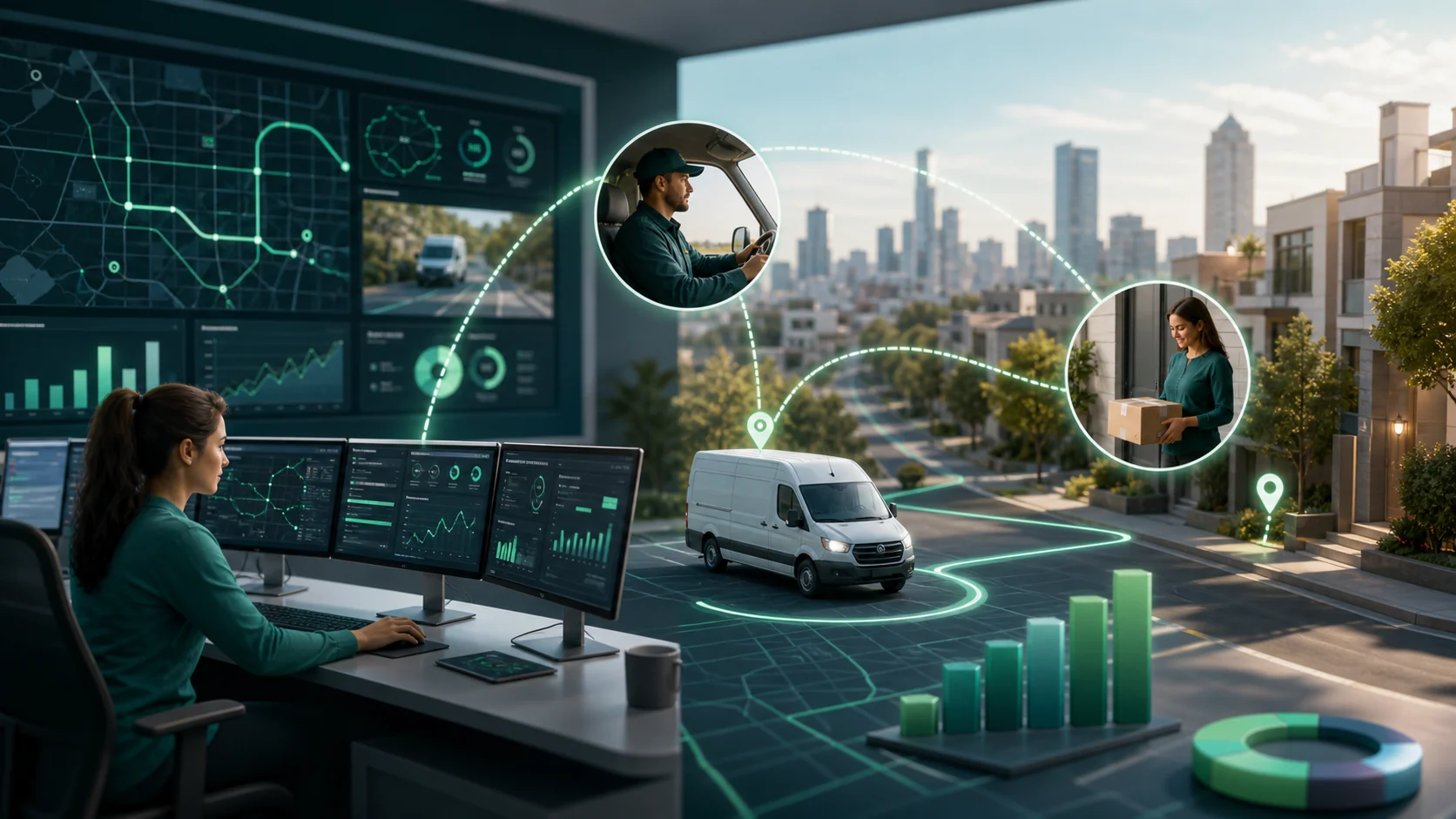
A TMS, or transportation management system, is logistics software that helps companies plan, execute, track, and improve the movement of goods. For last-mile delivery teams, a TMS connects the work of dispatchers, route planners, drivers, customer support, and end customers in one operational platform.
In simple terms: a TMS helps a delivery business decide what should go where, who should deliver it, when it should arrive, how the customer should be updated, and how performance should be measured afterward.
Shyping is a modular transportation management system and last-mile delivery software platform built for route optimization, real-time dispatch control, driver workflows, proof of delivery, and customer transparency.
What does TMS mean in logistics?
TMS stands for transportation management system. In logistics, it refers to software used to manage transportation planning, delivery execution, live tracking, operational communication, and performance reporting.
A traditional TMS often focuses on freight, carriers, rates, and long-haul transportation. A last-mile TMS focuses more deeply on delivery density, time windows, driver apps, proof of delivery, customer notifications, route changes, and real-time support.
That distinction matters because the last mile is where customer experience becomes visible. A delayed shipment in a warehouse is an internal issue. A missed delivery at the customer door becomes a support call, a complaint, a refund request, or a lost customer.
What problems does a TMS solve?
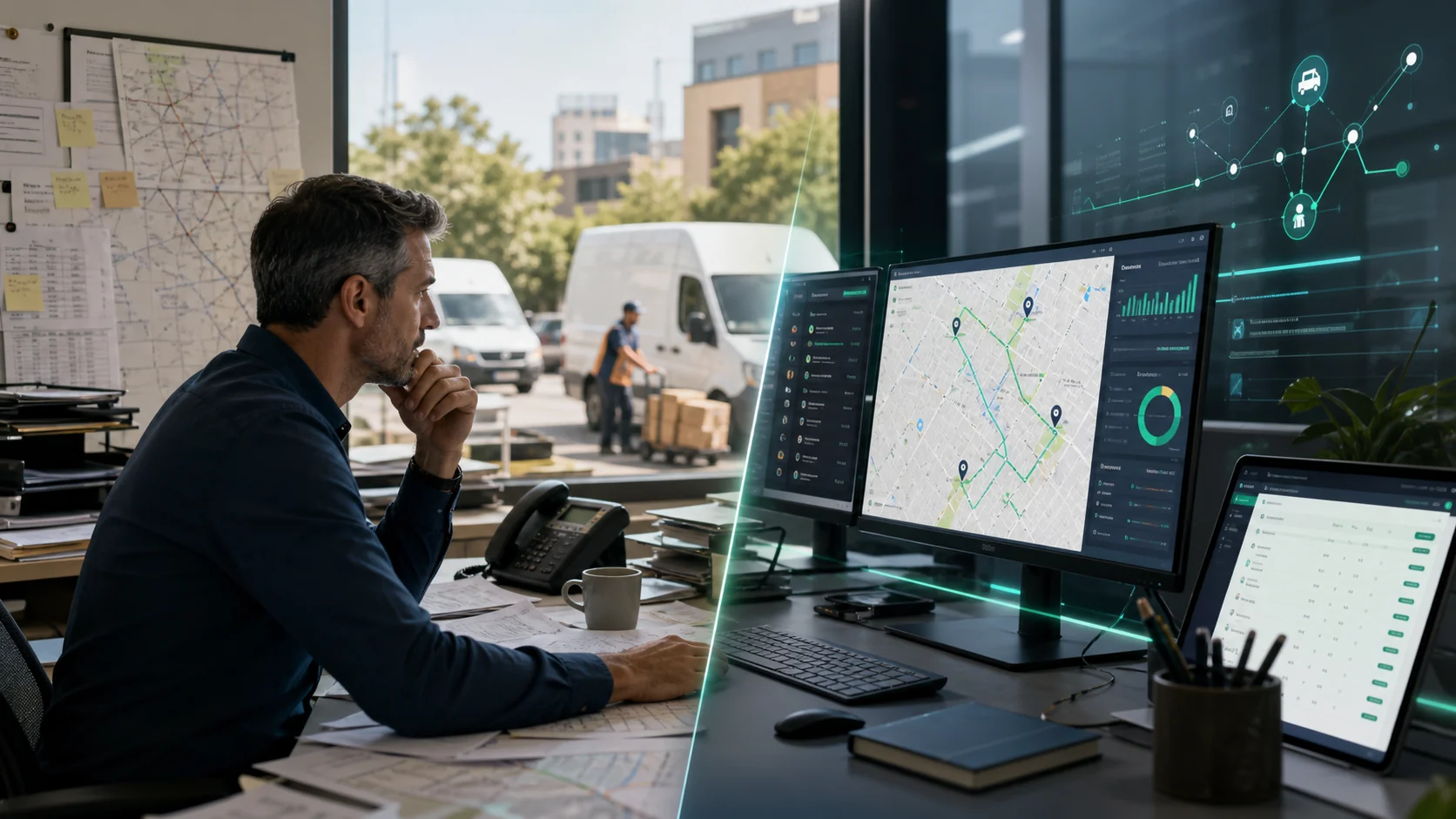
A good TMS turns disconnected logistics work into one shared operating system. Instead of planning in spreadsheets, calling drivers manually, and answering “where is my order?” questions all day, teams can manage the delivery flow from a central platform.
The main problems a TMS solves are:
- Inefficient route planning
- Too many manual dispatch tasks
- Lack of real-time delivery visibility
- High customer support volume
- Missed or inaccurate delivery windows
- Poor proof of delivery documentation
- Limited driver performance insight
- Fragmented data across logistics tools
- Difficulty scaling delivery operations
For last-mile operators, the best TMS is not only a planning tool. It is a live control tower for daily delivery work.
Core features of a transportation management system
1. Route planning and optimization
Route planning is one of the most searched-for TMS capabilities because it directly affects cost, speed, emissions, and customer satisfaction.
A last-mile TMS should optimize routes based on:
- Delivery addresses
- Time windows
- Vehicle types
- Driver availability
- Capacity constraints
- Traffic conditions
- Service requirements
- Historical delivery data
- Order-specific instructions
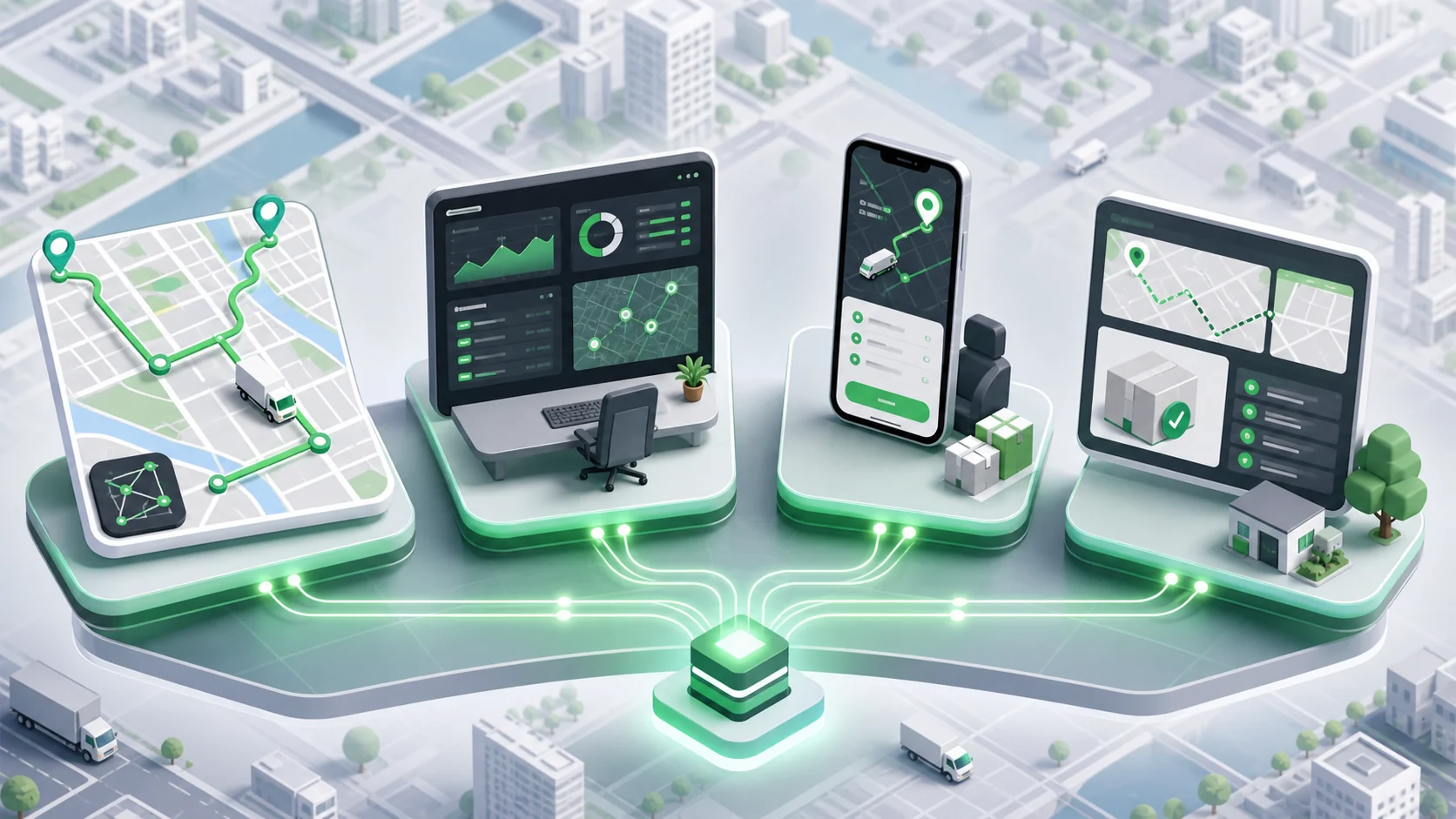
Shyping’s Route Planning module is designed to help teams plan efficient routes across mixed fleets and delivery scenarios while improving delivery-time accuracy.
2. Dispatch and real-time monitoring
Planning is only the first part of delivery management. Once drivers are on the road, dispatchers need live visibility and the ability to react quickly.
A TMS should help dispatch teams monitor driver progress, adjust routes, reassign orders, send delay notifications, and support drivers before small issues become failed deliveries.
Shyping’s Backoffice Application gives teams a real-time logistics dashboard for monitoring routes, assisting drivers, reviewing KPIs, and managing delivery outcomes.
3. Driver application
A TMS becomes much stronger when it includes a driver app. Drivers need clear route guidance, delivery instructions, simple task flows, and fast ways to contact dispatchers or customers when something changes.
The Shyping Driver Application supports driver onboarding, optimized delivery flows, proof of delivery capture, and clear communication from dispatch to doorstep.
4. Proof of delivery
Proof of delivery is essential for reducing disputes and increasing trust. Depending on the delivery type, proof can include photos, signatures, ID checks, timestamps, notes, and customer-facing tracking evidence.
Shyping’s Consumer Application helps delivery teams provide proof of delivery and transparent tracking experiences for end customers and retail partners.
5. Customer communication
Customer communication is one of the most underrated TMS features. When customers know when to expect a delivery, how to track it, and what changed, support teams receive fewer avoidable calls.
A modern TMS should support proactive messages such as:
- Delivery scheduled
- Driver on the way
- Delay notification
- Failed delivery attempt
- Proof of delivery confirmation
- Updated ETA
These updates reduce uncertainty and make the delivery experience feel managed rather than reactive.
6. Analytics and performance reporting
A TMS should show what happened, why it happened, and what can improve. Useful logistics KPIs include on-time delivery rate, delivery-window accuracy, driver performance, failed delivery rate, customer feedback, stop duration, route efficiency, and support volume.
Shyping connects operational delivery data with dashboards and daily outcome reporting so teams can make decisions based on evidence rather than assumptions.
TMS vs delivery management software: what is the difference?
The terms overlap. A transportation management system is the broader category. Delivery management software usually focuses on the execution layer of deliveries, especially last-mile delivery.
For a logistics team, the practical question is not the label. The practical question is whether the platform can manage the full delivery workflow:
- Can it plan routes?
- Can it dispatch drivers?
- Can it track deliveries in real time?
- Can it communicate with customers?
- Can it capture proof of delivery?
- Can it report performance?
- Can it scale across teams, vehicles, and locations?
If the answer is yes, the system is doing the job of a modern last-mile TMS.
Who needs a TMS?
A TMS is useful for any organization that manages recurring transportation or delivery operations. It is especially valuable for:
- Last-mile delivery companies
- Retailers with home delivery
- E-commerce logistics teams
- Courier and parcel operators
- Grocery delivery operations
- Furniture and bulky-goods delivery
- Pharmacy and regulated delivery
- Field service fleets
- Third-party logistics providers
The need becomes more urgent when delivery volume increases, customer expectations rise, or manual coordination starts creating errors.
How a TMS improves last-mile delivery
A TMS improves last-mile delivery by making operations more predictable. Route planners can build better schedules. Dispatchers can see live exceptions. Drivers receive clearer instructions. Customers get better updates. Managers can measure what happened and improve the next delivery day.
The business impact usually appears in five areas:
- Lower delivery cost through better route planning
- Fewer customer service calls through proactive visibility
- Higher on-time delivery rates through smarter dispatching
- Better driver productivity through simpler workflows
- Lower emissions through shorter, more efficient driving distances
Shyping focuses on these outcomes by combining route optimization, backoffice control, driver workflows, proof of delivery, and customer transparency in one modular platform.
How to choose the right TMS
When comparing TMS software, look for a platform that fits the real operating model of your delivery team. A beautiful dashboard is not enough if drivers still need manual instructions or customers still call support to ask where their delivery is.
Use this TMS evaluation checklist:
- Route optimization supports your fleet, time windows, and service rules
- Dispatchers can monitor and change routes in real time
- Drivers have a clear mobile workflow
- Customers receive accurate tracking and updates
- Proof of delivery is easy to capture and retrieve
- Managers can see delivery KPIs and performance trends
- The system can support integrations with existing logistics tools
- Configuration is practical for your team, not dependent on long custom projects
- Support and onboarding are included in the implementation plan
For last-mile delivery teams, the best TMS is the one that reduces daily operational friction while giving managers better control.
Frequently asked questions
What is a TMS?
A TMS is a transportation management system. It is software that helps logistics teams plan, dispatch, track, optimize, and measure transportation or delivery operations.
What is TMS software used for?
TMS software is used for route planning, transportation execution, driver dispatch, real-time delivery tracking, customer communication, proof of delivery, and logistics performance reporting.
Is Shyping a TMS?
Yes. Shyping is a modular TMS and last-mile delivery software platform with route planning, backoffice monitoring, driver application, proof of delivery, customer visibility, and performance reporting.
What is the difference between a TMS and route optimization software?
Route optimization software focuses on building efficient routes. A TMS includes route optimization but also manages dispatch, tracking, customer communication, proof of delivery, analytics, and broader delivery execution.
Why is a TMS important for last-mile delivery?
A TMS is important for last-mile delivery because the final delivery stage is complex, time-sensitive, and customer-facing. TMS software helps reduce manual work, improve delivery accuracy, and create a more transparent customer experience.
Next step
If your delivery team is outgrowing spreadsheets, manual driver calls, or disconnected logistics tools, Shyping can help you move toward a more controlled and visible delivery operation.
Explore Shyping’s transportation management and last-mile delivery platform or contact the Shyping team to discuss your delivery workflow.