
 info@shyping.com

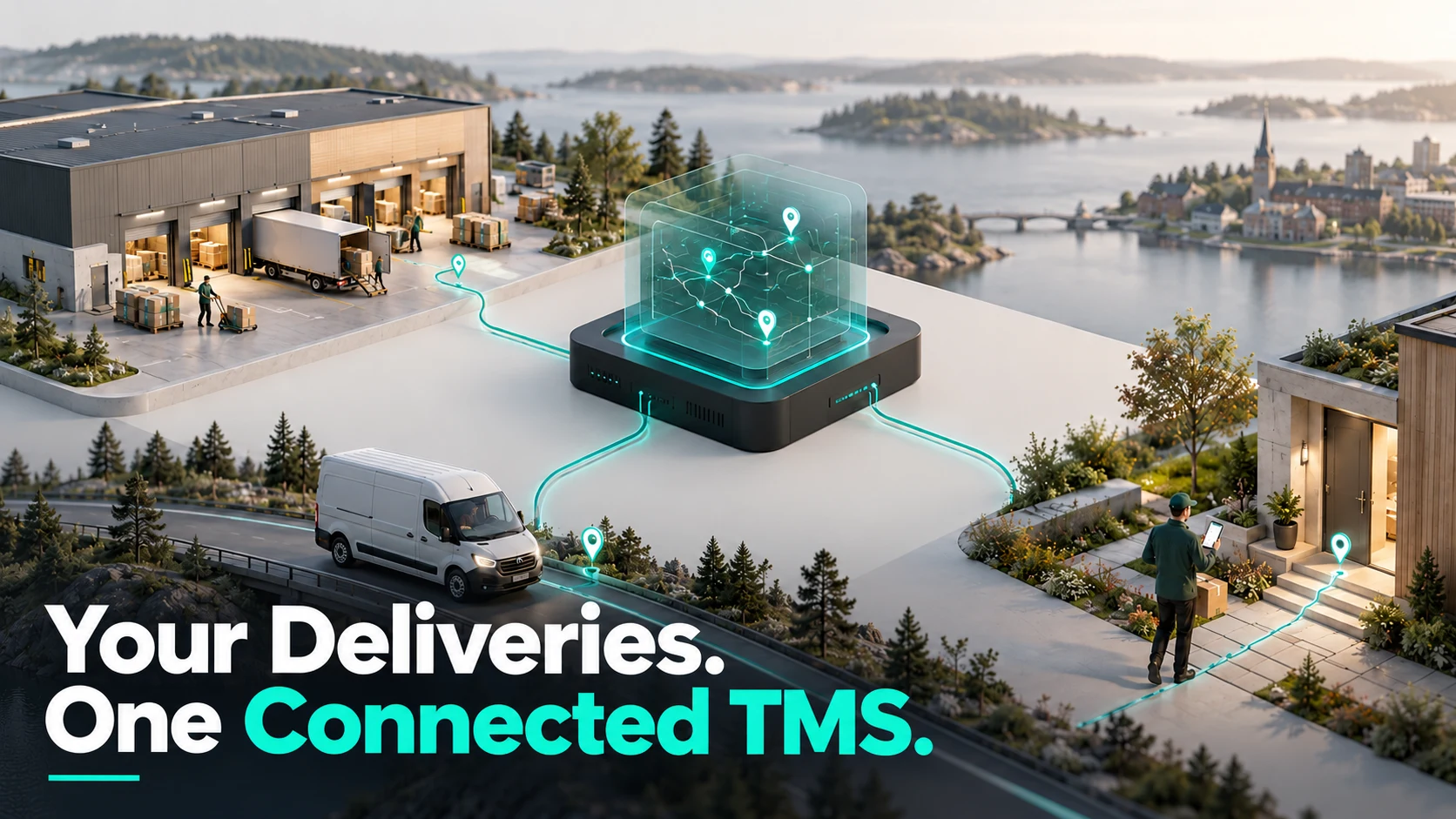
A transport management system (TMS) is software used to plan, execute, monitor and improve transportation operations. It creates a shared operational flow from incoming order data to route planning, dispatch, delivery confirmation and performance analysis.
Traditional TMS platforms often focus on freight procurement, carrier management and long-distance transport. A last-mile TMS focuses on the final journey to the recipient, where time windows, live route changes, customer communication and proof of delivery become especially important.
What does a TMS do?
A TMS turns transportation data into coordinated actions. Depending on the system and use case, it can import orders, validate delivery information, build routes, assign vehicles and drivers, monitor execution, calculate ETAs, notify customers, capture proof of delivery and report operational results.
The main value is not a single feature. It is the connection between planning, dispatchers, drivers, customers and performance data.
How does a last-mile TMS work?
A last-mile TMS usually follows a continuous workflow.
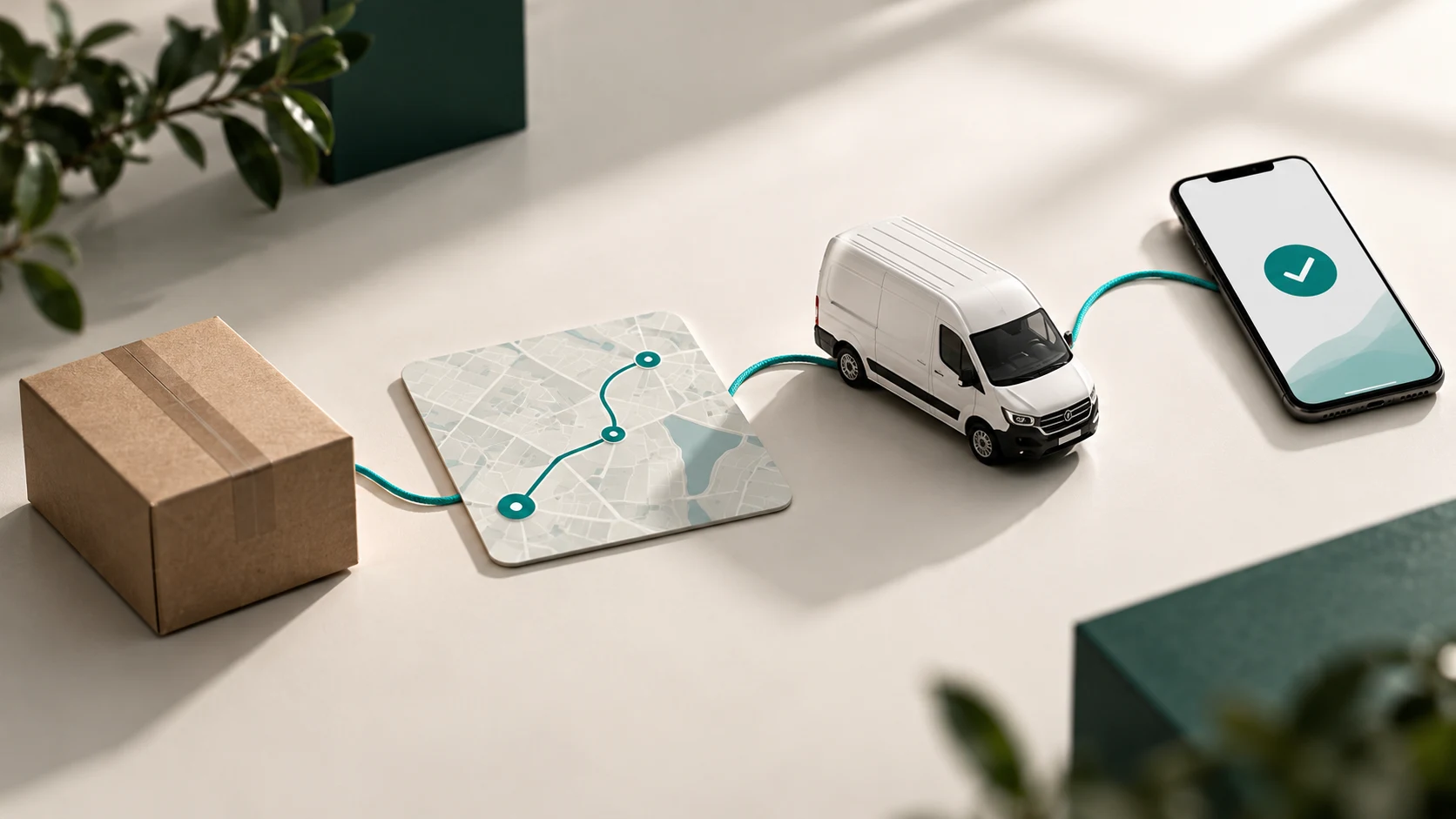
Orders enter the system from an e-commerce platform, ERP, warehouse system or file import. The planning function groups and sequences deliveries using constraints such as capacity, time windows, vehicle type and service time. Dispatchers release routes to drivers through a mobile application. During execution, the system receives status and location updates, recalculates ETAs and highlights exceptions. Customers receive delivery information, while proof of delivery and route outcomes return to the back office for reporting.
The next planning cycle can then use better historical assumptions.
Core TMS capabilities for last-mile delivery
Order and data management
The system should organize delivery data and make incomplete or conflicting information visible. Reliable inputs improve every step that follows.
Route planning and optimization
A route-planning engine assigns and sequences stops while respecting operational constraints. Strong systems support different configurations for different days, regions, vehicle types and delivery scenarios.
Dispatch and live control
Dispatchers need an operational view of route progress, delays and unresolved exceptions. They should be able to support drivers, reassign work and communicate changes.
Driver application
The driver app translates the plan into a clear delivery workflow. Navigation, status updates, instructions, customer contact and proof of delivery should be easy to use.
Customer tracking and communication
The customer experience should provide clear delivery expectations, relevant updates and access to proof of delivery when appropriate.
Analytics and reporting
Dashboards should show service performance, time-window accuracy, route outcomes, driver performance, customer feedback and exception trends.

TMS vs route-planning software: what is the difference?
Route-planning software focuses on assigning and sequencing stops. A TMS covers a broader transportation workflow that can include orders, dispatch, driver execution, tracking, proof of delivery and reporting.
Some businesses need a focused route-planning tool. Others need a connected delivery-management platform. The decision depends on whether the operational problem is limited to route creation or spans the full delivery lifecycle.
TMS vs delivery management system
The terms often overlap. “TMS” can describe broad transportation management across modes and carriers. “Delivery management system” commonly emphasizes local or last-mile delivery execution.
Instead of choosing by label, compare the actual workflow. Ask which data enters the system, who uses it, what happens during live delivery and which outcomes are measured.
What are the benefits of a TMS?
A well-implemented TMS can reduce manual planning, improve route consistency, increase delivery visibility and create a more standardized driver experience. It can also support proactive customer communication and provide a reliable record of delivery outcomes.
Operational benefits depend on process quality. Software cannot compensate for unclear ownership, poor order data or unrealistic delivery promises. Implementation should combine technology with workflow design and team training.
When does a business need a TMS?
A business may be ready for a TMS when manual planning consumes too much time, route quality depends on one person, drivers use inconsistent processes, customers frequently ask for delivery updates or managers cannot explain why deliveries fail.
Growth is another signal. If the number of orders, vehicles, depots, delivery scenarios or customer requirements is increasing, a shared system can prevent complexity from turning into fragmented work.
Is a TMS suitable for a small business?
Yes, if the system matches the problem. A small delivery operation does not need every enterprise feature. It may need simple order import, practical route planning, a driver application, customer notifications and basic performance reporting.
A modular platform can be useful because the business can begin with the capabilities that solve the current bottleneck and add more as the operation grows.
How to choose a TMS
Start with the workflow
Document how orders enter, how routes are created, how drivers receive work, how customers are informed and how exceptions are resolved. Identify the handoffs that create delays or duplicate data.
Define must-have constraints
List the factors that determine whether a route is executable: time windows, vehicle types, capacities, driver schedules, skills, depot rules and proof requirements.
Test real scenarios
Use representative delivery data in demonstrations or pilots. Include a normal day, a peak day and a disruption scenario. Ask users from planning, dispatch and driving to evaluate the process.
Evaluate usability and onboarding
A powerful system creates little value if teams cannot adopt it. Review the number of steps required for common tasks, available support, documentation, configuration and training.
Check integration and reporting
Confirm how order data enters, how delivery outcomes return to other systems and whether the reporting supports operational decisions.
Agree on success measures
Set a baseline before implementation. Track planning time, on-time performance, first-attempt success, distance, route completion and customer contacts.
How Shyping fits the last-mile TMS model
Shyping offers a modular last-mile logistics solution that connects route planning, back-office monitoring, a driver application and a consumer application. The back office supports live monitoring, predictive ETAs, customer communication and performance insights. The driver workflow supports navigation, operational communication and proof of delivery.
Shyping also provides onboarding, logistics process transformation and custom services to align the technology with the operation.
Final takeaway
A transport management system is the operational link between transportation data and delivery execution. For last-mile teams, the right TMS should make routes more practical, give dispatchers live control, simplify driver work, inform customers and turn delivery outcomes into better future decisions.
Frequently asked questions
What does TMS stand for in logistics?
TMS stands for transport management system or transportation management system. Both terms describe software used to manage transportation planning and execution.
What is the main purpose of a TMS?
The main purpose of a TMS is to coordinate transportation operations from planning through delivery and reporting, reducing fragmented manual work and improving visibility.
Does a TMS include route optimization?
Many TMS platforms include route planning or integrate with a route-optimization engine. Buyers should verify that the system supports their actual constraints and delivery scenarios.
Can a TMS provide real-time delivery tracking?
A last-mile TMS can use driver status and location data to show live progress, generate predictive ETAs and communicate relevant updates to dispatchers and customers.
How long does TMS implementation take?
The timeline depends on integrations, data quality, process complexity, configuration and training. A focused modular rollout may be faster than a large enterprise implementation, but it still requires clear ownership and testing.
Related reading
See how Shyping fits your delivery operation
Connect route planning, live operations, driver workflows and customer communication around the way your team delivers.